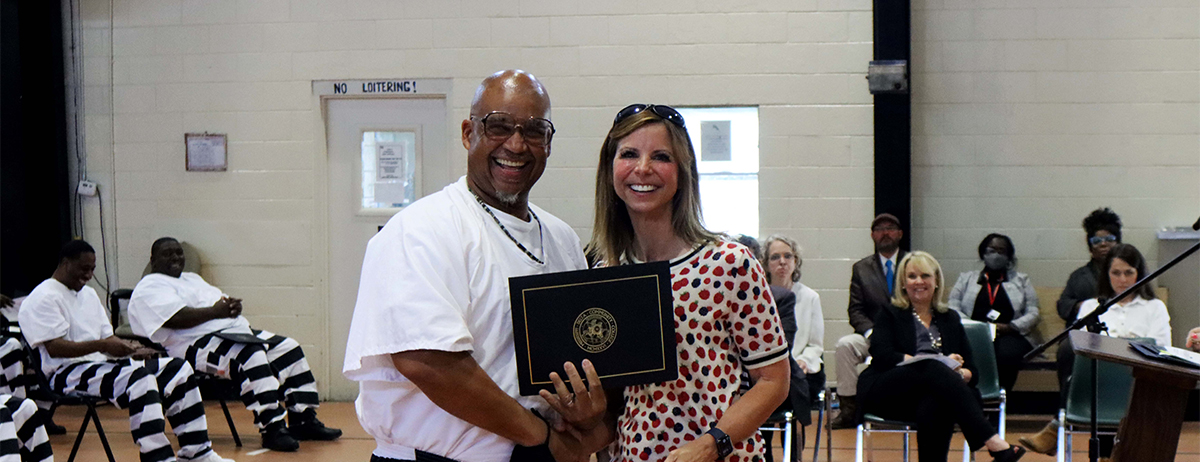
Empowering Incarcerated Individuals Through Education
Empowering Incarcerated Individuals Through Education
Main Content Section
Contact
Teela Rivera
Prison Education Program Coordinator
662-246-6302
trivera@msdelta.edu
Prison Education Program
Mississippi Delta Community College offers a comprehensive College Prison Education Program (PEP). This initiative provides incarcerated individuals with high-quality postsecondary education. It strongly supports academic achievement and personal growth. It also fosters successful reentry into society.
Accessible Learning Locations
To ensure broad regional access, the program directly serves students at five specific facilities. This network includes the Mississippi State Penitentiary in Parchman, alongside the Bolivar County, Issaquena, and Washington County correctional facilities. Additionally, tailored educational opportunities are provided at the Delta Correctional Facility for Women to reach female scholars.
Rigorous Academic Standards
This initiative delivers credit-bearing courses for degree completion. Qualified faculty teach every single class. They meet identical academic standards as on-campus options. Students gain structured, college-level instruction. They earn industry-relevant credentials. These pathways directly support workforce development and career readiness. Academic advising and support services are fully integrated.
Essential Grants and Partnerships
A generous Mellon Foundation Grant funds this program. MDCC collaborates with the Mississippi Humanities Council. They also partner with the Mississippi Consortium for Higher Education in Prison. These partnerships enrich the entire curriculum. They explicitly incorporate humanities' education into the courses. This fosters critical thinking and expands resource access.
Positive Long-Term Impact
The program aims to expand higher education access. It promotes equity in underserved populations. Education directly reduces recidivism rates. It prepares individuals for successful community reintegration. Research shows participants gain meaningful employment after release. They often continue their higher education. They experience significantly reduced rates of reincarceration. Finally, they contribute very positively to their communities.
Have Questions or Need Help?
For more information, contact:
Teela Rivera
Prison Education Program Coordinator
trivera@msdelta.edu
- Assists with registration for classes
Carrie Bennett
Social Science Instructor and Prison Education Program Advisor
cbennett@msdelta.edu
- Assists with advising for future classes, receiving a copy of an official transcript,
and updating personal degree evaluations